
For primary care providers
Color loss hides the things you are already looking for.
When a patient stops discriminating color, they stop noticing the signs that color is the warning for. That happens quietly, years before anyone mentions it to you.
What you actually do
Three things, none of which add a visit.
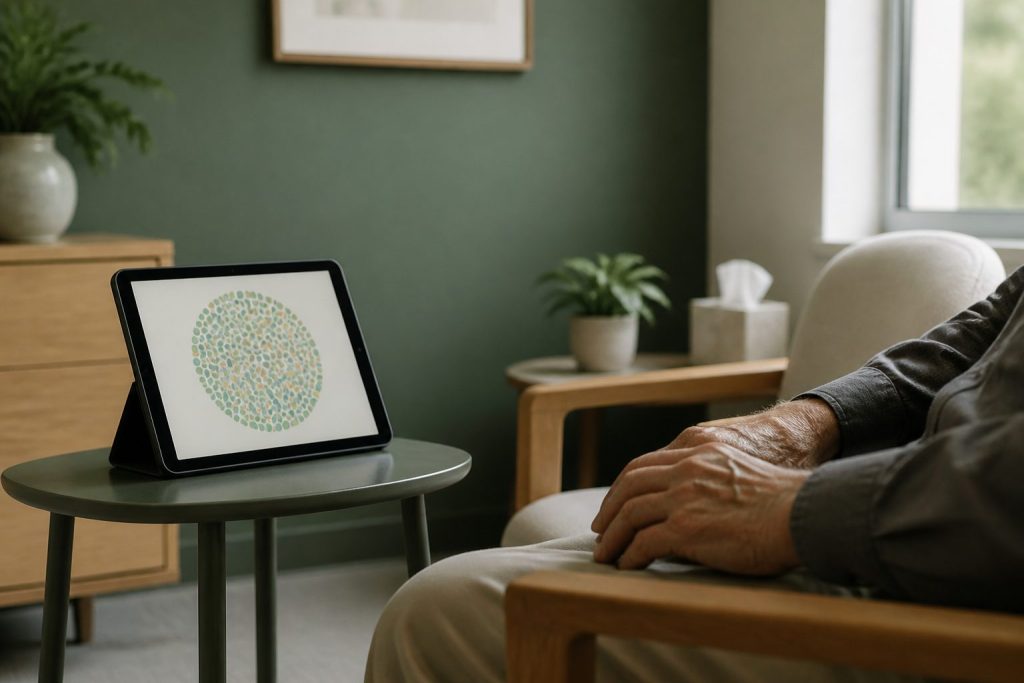
OneScreen during a routine visitUnder ten minutes, delegated to staff, no special equipment.
TwoRead the result in contextA failed screening is a reason to look harder at glaucoma, diabetes, macular degeneration and cataracts.
ThreeRoute to an eye professionalReferrals match to a local optometrist or ophthalmologist by zip code.
What it changes for you
- A cheap, fast signal for conditions you are already screening for
- Fewer medication misidentifications among older patients
- Documented screening activity in your own reporting
- Referral routing you do not have to maintain
What it changes for them
Patients who cannot see color reliably miss pressure sores, rashes, jaundice and cyanosis on their own bodies. Finding it early is often the difference between a phone call and an admission.
What it costs. A doctor account is $49 a month and starts with a 30 day free trial. Most practices want to walk through it before signing up, which is what the conversation is for.