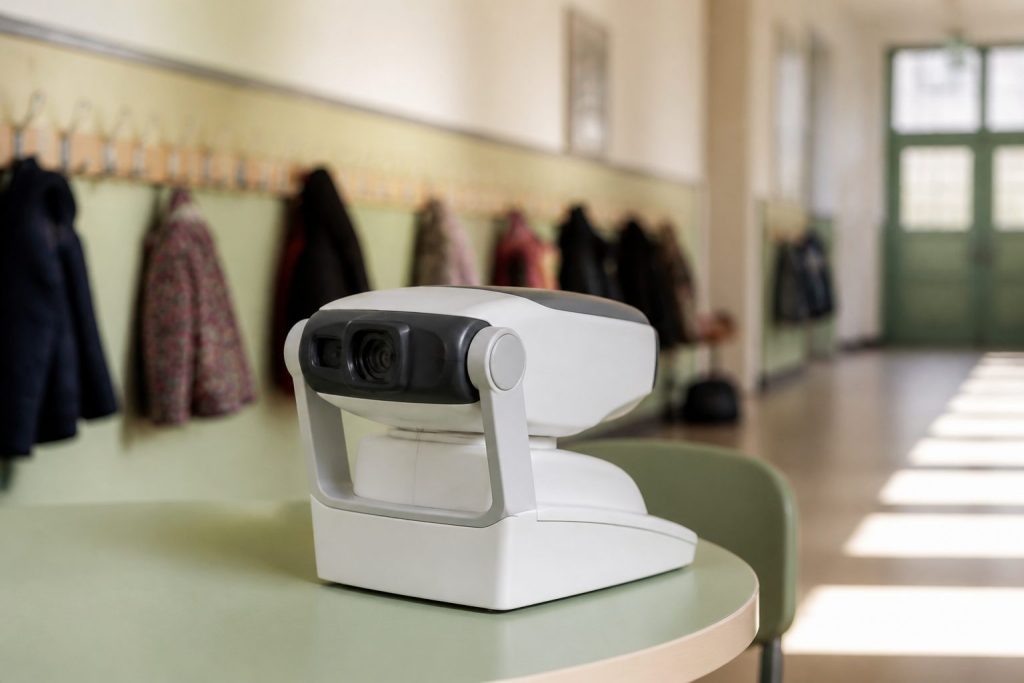
Some children struggle to read and a reason could be due to their eyes.
We find them in about thirty seconds during a vision screening a school already runs, then teach the one habit that corrects it: look left, read right.
Built by Teachers of the Visually Impaired. Partnered with local Lions Clubs. Working with schools, pediatric practices and post-acute care providers across four time zones.
Two programs
Two screenings. Both take minutes. Both change what happens next.
Reading, for children
A child whose eyes travel right to left, or outward from the center, will flip b and d, E and 3, p and q. It looks like dyslexia. Most of the time it is not. We identify these children during the screening a school already runs, then teach the habit that corrects it.
A 27 plate screening, under ten minutes, taken in a clinic or at home. In children it catches roughly 1 in 12 boys who cannot see color the way the classroom assumes. In older adults it catches missed pressure sores, jaundice and medication errors, and surfaces undiagnosed glaucoma, diabetes and macular degeneration.
The cost of missing these children is measured in years.
A child who cannot read is tested for weeks, pulled from class, and put through a meeting with six adults at the table. More than half the time, the reason was never a learning disability.
30 secTo check a child during a screening you are already running. Two minutes at the outside.
3%Of children ever reach an eye doctor, so this was never going to scale through clinics
1 in 12Boys have a color vision deficiency. For girls it is 1 in 200.
80Children through the reading program in year two, up from about two dozen in year one
“So I am not stupid.”What children say when they find out why reading was hard. It is the reason this organization exists.
How the network works
Screeners find them. Eye doctors receive them. Everyone sees the results.
Step 1EnrollA nurse, pediatrician, primary care or post-acute provider gets an account.
Step 2Screen or inviteTest on site, or send an invitation so a parent completes it at home.
Step 3Results returnScored automatically and emailed back to whoever referred the child.
Step 4Routed to a doctorA failed screening matches to a local eye doctor by zip code.
Step 5ProvenInvites sent, took a test, failed a test, agreed to referral, has a doctor.
That last step is the part districts and practices ask about first. Every screening you run is counted, and the reporting is yours. It is how you show a school board or a practice manager that the program did something.
Find your path
Tell us who you are. We will tell you the one thing to do next.